When Process Becomes the Problem - Why Opening Doors Beats Building Walls

Wilco van Duinkerken
Co-founder
There's a moment in every tech organization when things start to crack. Not the code, though that's probably cracking too, but the space between teams.
You know the moment I'm talking about. Bugs are piling up faster than they're getting fixed. Customer support is escalating everything. Sales is making commitments that engineering finds out about on Slack. Leadership is asking "when will it be ready" with increasing frequency and decreasing patience.
The instinct, for most technical leaders, is to build walls. Create a ticketing system. Implement approval workflows. Route all requests through product.
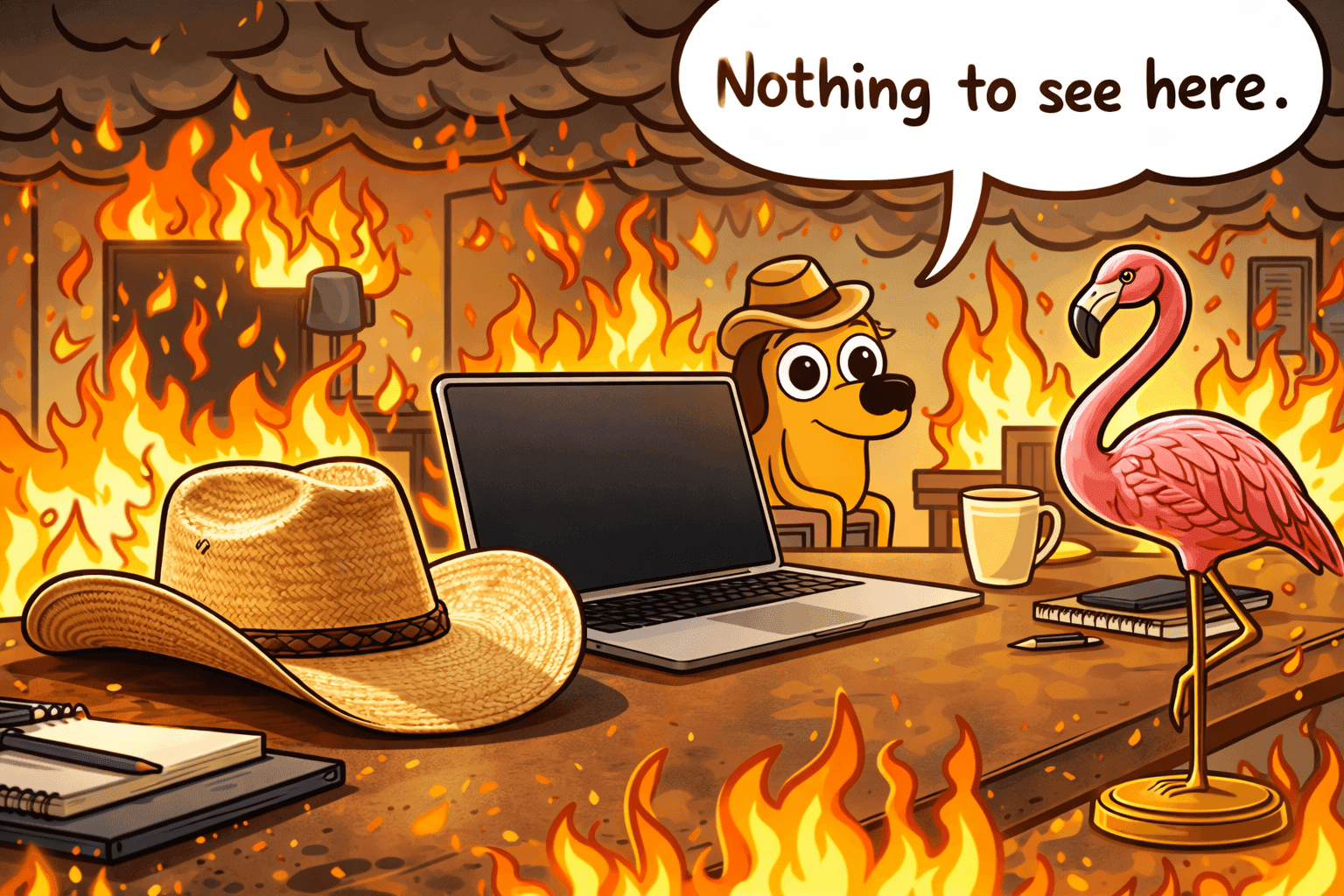
But here's what I learned ten years ago when my own team hit this breaking point: when things are truly on fire, process doesn't put out the flames.
The Frustration Spiral
What's happening is that trust is eroding. The rest of the organization doesn't understand why fixes take so long. Engineering doesn't understand why people can't just log a ticket and wait their turn.
The Counterintuitive Play
Instead of building walls, we opened the doors as wide as we could. We designated rotating "Rodeo Service" duty: one or two engineers each week whose primary job was to be as reachable as possible.
And we had one non-negotiable rule: if you want Rodeo's attention, you talk to a human. Five to ten minutes. On camera or in person. Actual conversation.
First, it's a filter for real urgency. Second, it's an anti-weaponization mechanism. Third, it forces context to flow.
Why This Works When Process Doesn't
When you're in crisis mode, you don't have a scale problem. You have a trust problem and a context problem. Human contact solves both of these problems in ways that process cannot.
The Cultural Statement
Requiring conversation isn't just a tactical choice. It's a statement about culture. It says: we're not hiding behind process. We're humans solving problems together, and that requires actually talking to each other.
When You Should Try This
If the gap between what the business expects and what tech can deliver is widening, communication between engineering and other teams has become tense, or quality is dropping and frustration is rising in a compounding cycle, consider that maybe the answer isn't better process. Maybe it's more human contact, not less.
Key Takeaways
Over-reliance on tickets and gates in high-pressure periods masks a trust and context problem, not a process gap.
A counter-move is to open direct access via Rodeo-style engineers who handle real-time conversations instead of async queues.
Mandatory 5–10 minute conversations filter true urgency, de-weaponize complaints, and surface richer business context for engineers.
Rodeo Service acts as a temporary circuit breaker to lower tension and reveal systemic issues, not a permanent support model.
The Scaleflow Journey
Related articles
Keep reading

Why AI-Driven Companies Must Rapidly Incorporate New Models: The Adaptability Advantage
Companies that rapidly swap and upgrade AI models maintain margins, speed, and customer satisfact...

Closing the Gap Between Commercial Ambition and Product & Tech Reality
Founders operating on two misaligned tracks: commercial promises vs. actual product/tech reality

Three types of Business Cases for Product teams
Use back-of-napkin, roadmap-ready, and execution-ready business cases to align teams and prioritize.
Get Product & Tech clarity in one day
200+ assessments. Same-day results. Built by operators who've been on both sides of the table.